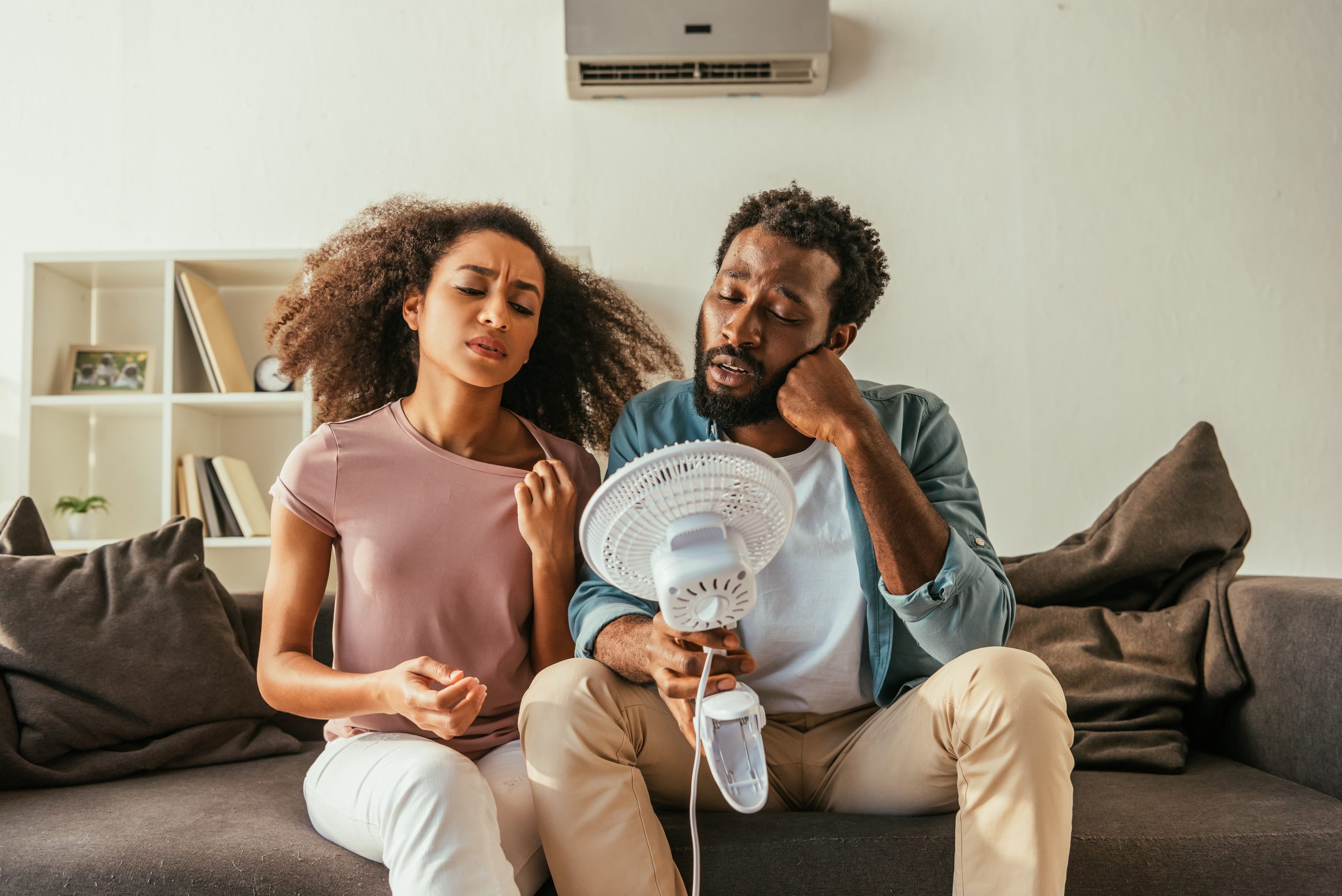
You hear your AC system turning on and feel air coming through the vents, but you still watch your thermostat struggle to reach the desired temperature, all while knowing your energy bills are continuing to climb. Why is this happening? That’s an excellent question! After all, once you know what is causing your air conditioner to run without cooling your home, you can take the proper steps to resolve the issue.
Keep reading to find out the top reasons air conditioners cycle on but don’t cool living spaces.
One of the most common reasons an air conditioner struggles to cool a home is a dirty or clogged air filter. While filters are designed to trap dust, dirt, and airborne particles, they can become blocked over time if they aren’t replaced regularly.
When airflow becomes restricted, your system has to work much harder to circulate cool air throughout your home. This can reduce cooling performance, increase energy usage, and place unnecessary strain on system components.
In some cases, restricted airflow can even lead to frozen evaporator coils or overheating components. Replacing filters regularly is an important part of HVAC maintenance, but if the issue has already affected your system’s performance, professional AC repair may be necessary to restore proper airflow and cooling efficiency.
Refrigerant is essential for removing heat from your home. If your air conditioner develops a refrigerant leak, it may continue running but struggle to cool effectively because the system no longer has the proper refrigerant levels needed to absorb and transfer heat.
Refrigerant leaks can occur due to damaged coils, corroded lines, or worn connections. Because refrigerant systems require specialized handling, professional air conditioning repair is necessary to safely locate and repair the leak.
Low refrigerant levels can also damage your compressor if left unresolved. Prompt air conditioner repair can help prevent more costly HVAC problems while restoring comfort to your home.
Your evaporator coil plays a major role in absorbing heat from indoor air. However, when airflow becomes restricted or refrigerant levels drop too low, the coil can freeze over. When this happens, your air conditioner may continue operating without effectively cooling your home.
Frozen evaporator coils are often connected to issues such as dirty filters, blocked vents, refrigerant leaks, or blower motor problems.
While turning off the system may temporarily thaw the coils, the underlying issue still needs to be addressed. Professional AC repair helps identify the root cause of frozen coils and prevents recurring problems.
A faulty thermostat can cause communication problems between your HVAC system and cooling equipment, preventing your home from reaching the desired temperature.
Incorrect thermostat settings, dead batteries, calibration issues, and faulty wiring can all interfere with cooling performance.
Because thermostat issues can mimic larger HVAC problems, professional air conditioning technicians can inspect both the thermostat and cooling system to ensure accurate diagnosis and repairs.
Even if your air conditioner is functioning properly, damaged ductwork can prevent cool air from reaching your living spaces effectively. Leaky ducts allow conditioned air to escape into attics, crawl spaces, or walls instead of being distributed throughout your home.
Blocked ducts can also restrict airflow and create uneven temperatures in different rooms.
Professional HVAC technicians can inspect your ductwork for leaks, damage, or airflow restrictions that may be affecting cooling performance. In many cases, sealing or repairing ducts can significantly improve comfort and efficiency.
Your outdoor condenser unit is responsible for releasing heat collected from inside your home. Over time, dirt, debris, grass clippings, and outdoor contaminants can build up on condenser coils, making it harder for your system to release heat properly.
When condenser coils become dirty, your air conditioner has to work harder to cool your home, which reduces efficiency and increases wear on the system.
Routine cleaning and maintenance help keep condenser coils functioning properly. If dirty coils have already caused system strain or overheating, professional AC repair may be necessary to restore normal operation.
As air conditioning systems age, various components naturally wear down over time. Motors, capacitors, compressors, electrical connections, and fans can all lose efficiency or fail after years of use, leading to lower cooling performance.
When multiple components begin failing, professional technicians can help determine whether repairs or replacement make the most sense for your home and budget.
Many of the cooling problems homeowners experience can be prevented through regular HVAC maintenance. During preventive maintenance visits, HVAC technicians inspect, clean, and test major system components to ensure everything is functioning properly.
Routine maintenance also allows technicians to catch refrigerant leaks, airflow issues, worn components, and electrical problems early before they lead to major air conditioning repair needs.
When your air conditioner runs but fails to cool your home properly, working with an experienced HVAC company is essential. After all, diagnosing cooling issues accurately requires professional training, specialized equipment, and a complete understanding of how HVAC systems operate. If you live in Central New Jersey, all you need to do to get to the bottom of your AC’s problem is call Total Energy Service. Our experienced technicians work hard to identify problems quickly, recommend honest solutions, and restore comfort as efficiently as possible.
Connect with our team today and find out why your air conditioner keeps running but won’t cool your home!